Heart Attack vs Gas: How to Tell the Difference

Many people mistake the symptoms of a heart attack for gas or acidity. This confusion can delay life-saving treatment. While gas can cause chest discomfort, a heart attack is a medical emergency that requires immediate attention.
Knowing the difference could save a life.
What Does Gas Pain Feel Like?
Gas pain usually occurs because of trapped gas, indigestion, or acidity. It is commonly associated with:
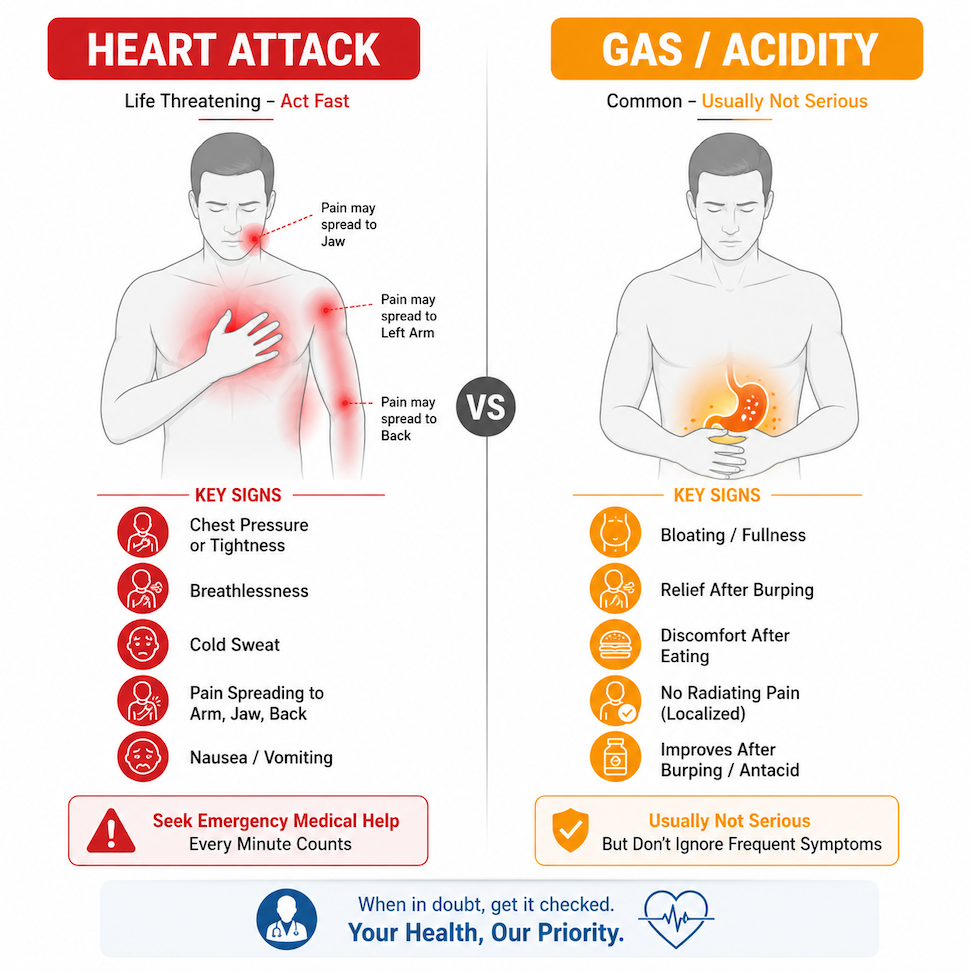
- Burning sensation in the chest or upper abdomen
- Bloating or fullness
- Frequent burping
- Pain that improves after passing gas or belching
- Pain that changes with eating or body position
- Mild to moderate discomfort
Although gas pain can sometimes be intense, it usually improves within a short time.
What Does a Heart Attack Feel Like?
A heart attack happens when blood flow to a part of the heart is blocked, causing damage to the heart muscle.
Common symptoms include:
- Heavy pressure, tightness, or squeezing pain in the center of the chest
- Pain spreading to the left arm, both arms, jaw, neck, back, or shoulder
- Shortness of breath
- Cold sweating
- Nausea or vomiting
- Unusual tiredness or weakness
- Dizziness or fainting
The pain usually lasts for more than 15–20 minutes and does not improve with burping or changing position.
Heart Attack vs Gas: Key Differences
| Gas Pain | Heart Attack |
|---|---|
| Burning or bloating sensation | Heavy pressure, squeezing, or tightness |
| Often improves after burping or passing gas | Usually does not improve with burping |
| Related to meals or indigestion | May occur during activity or even at rest |
| Pain may shift around the abdomen | Pain often spreads to the arm, jaw, neck, or back |
| Usually no cold sweat | Cold sweating is common |
| Usually no shortness of breath | Breathlessness is common |
| Generally not life-threatening | Medical emergency |
Can a Heart Attack Feel Like Gas?
Yes. Some heart attacks, especially in women, older adults, and people with diabetes, may present with symptoms such as:
- Indigestion
- Upper abdominal discomfort
- Nausea
- Mild chest discomfort
- Unusual fatigue
This is why persistent "gas" that feels different from your usual indigestion should never be ignored.
When Should You Go to the Hospital?
Seek emergency medical care immediately if you have:
- Chest pain lasting more than 15–20 minutes
- Pain spreading to the arm, jaw, neck, shoulder, or back
- Difficulty breathing
- Cold sweating
- Fainting or severe dizziness
- Chest discomfort with nausea or vomiting
Do not wait to see if the pain goes away on its own.
The Bottom Line
Gas pain is common and usually improves with time or after passing gas. A heart attack, however, can be life-threatening and requires urgent medical treatment. If you are unsure whether your symptoms are due to gas or a heart attack, treat it as a heart emergency and seek immediate medical care. Early treatment can significantly improve outcomes.
Disclaimer: This article is for educational purposes only and should not replace professional medical advice. If you think you or someone else may be having a heart attack, call your local emergency medical services or go to the nearest emergency department immediately.