Hair Fall: Causes, Types & Treatment

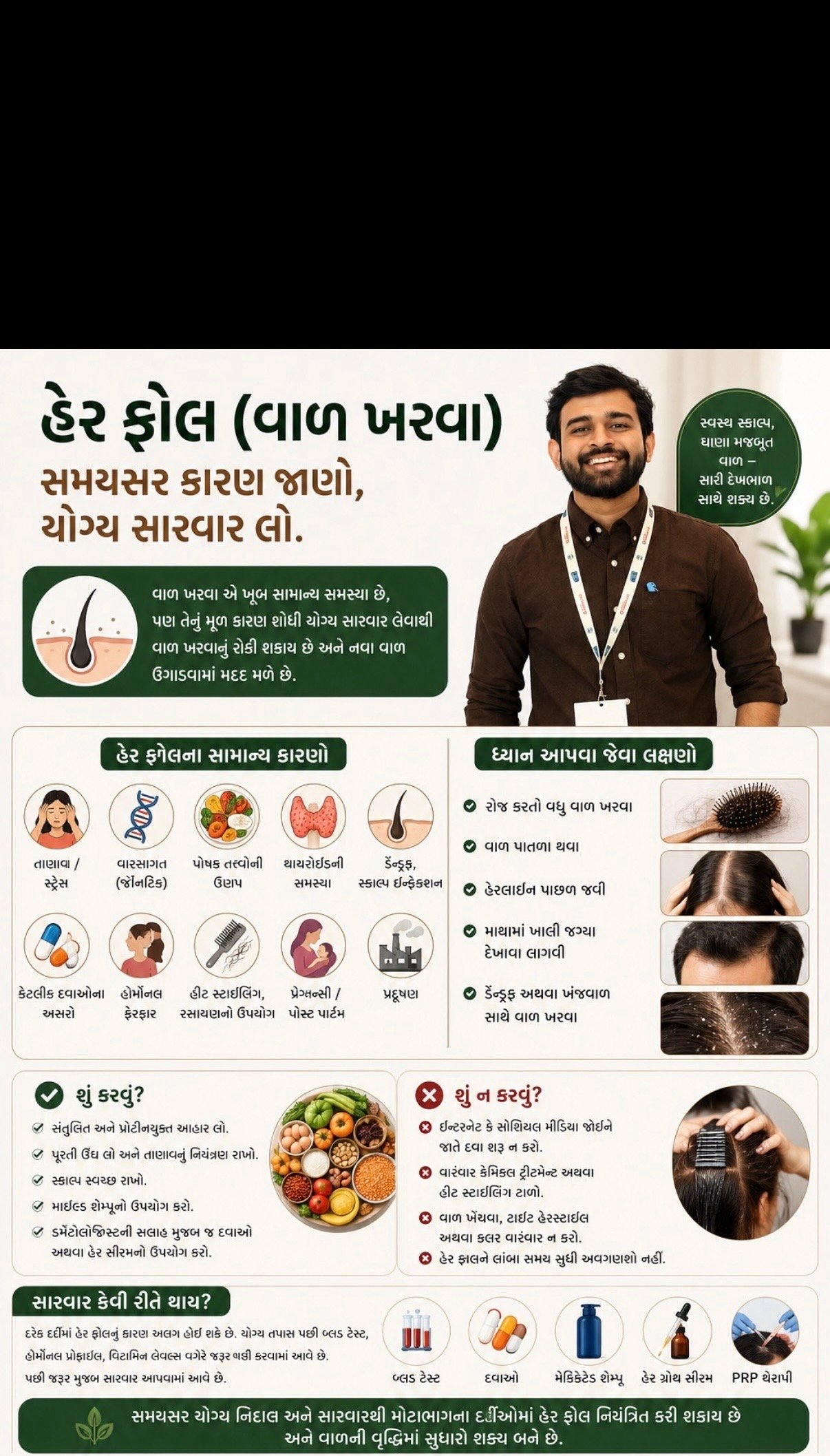
Hair fall is one of the most common concerns affecting both men and women. While losing 50–100 hairs per day is considered normal, excessive hair shedding, thinning, or visible bald patches should not be ignored. Early diagnosis and appropriate treatment can help prevent further hair loss and improve hair density.
Common Causes of Hair Fall
Hair fall can occur due to various reasons, including:
- Genetic factors (Androgenetic Alopecia) – The most common cause in both men and women.
- Nutritional deficiencies – Low iron, Vitamin D, Vitamin B12, zinc, or inadequate protein intake.
- Hormonal imbalance – Thyroid disorders, PCOS, pregnancy, or menopause.
- Stress and illness – Physical or emotional stress, high fever, surgery, or rapid weight loss can trigger hair shedding (Telogen Effluvium).
- Scalp conditions – Dandruff, fungal infections, psoriasis, or seborrheic dermatitis.
- Medications – Certain medicines used for blood pressure, cancer, acne, or depression.
- Hair styling practices – Frequent chemical treatments, excessive heat styling, or tight hairstyles.
Male Pattern Baldness
Male Pattern Baldness (Androgenetic Alopecia) usually begins gradually and is influenced by genetics and hormones.
Common Features:
- Receding hairline
- Thinning over the crown (vertex)
- Progressive hair loss leading to baldness
- Usually starts after puberty and becomes more noticeable with age
Early treatment can significantly slow progression and preserve existing hair.
Female Pattern Hair Loss
Female Pattern Hair Loss is different from male baldness.
Common Features:
- Diffuse thinning over the central scalp
- Widening of the hair partition
- Hairline usually remains preserved
- Often associated with hormonal changes or genetics
Women should also be evaluated for nutritional deficiencies and hormonal disorders when appropriate.
When Should You Consult a Dermatologist?
Seek expert advice if you notice:
- Hair fall lasting more than 2–3 months
- Widening of the hair partition
- Receding hairline
- Bald patches
- Hair loss with itching, scaling, or dandruff
- Hair fall after pregnancy or illness that does not improve
Avoid self-medication or relying on social media remedies, as not every hair fall requires the same treatment.
Healthy Hair Tips
- Eat a protein-rich, balanced diet.
- Get adequate sleep and manage stress.
- Avoid smoking.
- Use gentle hair care products.
- Avoid excessive heat styling and harsh chemical treatments.
- Treat dandruff and scalp infections promptly.
Take-Home Message
Hair fall is treatable—but early diagnosis is the key. If you notice persistent hair loss or thinning, consult a qualified dermatologist for a personalized treatment plan.
Dr. Vinas Mangukiya
MD Dermatologist
Healthy Scalp • Healthy Hair • Expert Skin Care